

Reward-Tightrope: Balancing Loyalty and Talent in an Organization
A tailored 'Total Rewards' strategy can help you find the Balance Loyalty and Talent in Your Organization
Summary Points
- Loyalty vs. Talent: Leaders must balance rewarding long-term commitment vs. exceptional performance
- Loyalty's Value: Boosts retention and culture but risks complacency if overemphasized
- Talent’s Impact: Fuels growth and attracts stars, but overfocus risks cohesion
- Balanced Strategy: "Total Rewards" blends pay, benefits, recognition & growth - tailored to motivate & retain all talent
Reading time: 4 minutes
Introduction: The Loyalty vs. Talent Reward Dilemma
The Challenge: Leaders constantly face a tricky question: reward long-term commitment (loyalty) or exceptional results (talent/performance)? It's a balancing act.
Both are Valuable: Loyal employees provide stability; top talent drives innovation.
The Difficulty: Designing fair reward systems that motivate everyone without causing resentment or undermining goals is tough.
Our Goal: This post examines the distinction between loyalty and talent today, the pros and cons of rewarding each, the risks of imbalance, and how a "Total Rewards" strategy can help achieve equilibrium.
Defining Our Terms: Loyalty and Talent in 2025
Let's clarify these concepts for today's workplace.
What is Employee Loyalty Today?
Loyalty is more than just years served. It includes:
Commitment to the company's success.
Belief in the mission and values.
A sense of belonging and connection.
A desire to stay long-term.
Key Caveat: Even loyal employees might leave if growth needs aren't met. Loyalty must be earned and maintained.
What Do We Mean by Talent/Performance?
Talent focuses on individuals demonstrating:
Exceptional skills and capabilities.
High growth potential.
Consistent, high-impact performance against goals.
Key Contrast: Talent emphasises impact and potential, while loyalty emphasises commitment over time.
The Case for Rewarding Loyalty
Why recognise long-term commitment?
Stability & Reduced Turnover: Lower hiring costs and a more predictable workforce.
Stronger Culture and Cohesion: Long-servers often embody the values and foster a sense of belonging.
Knowledge Retention: Keeps deep institutional knowledge in-house.
Reliability & Dependability: Acknowledges consistent contribution.
The Case for Rewarding Talent & Performance
Why focus rewards on high-impact individuals?
Drives Innovation & Growth: Motivates those who generate new ideas and push boundaries.
Increases Productivity: Directly incentivises goal achievement.
Competitive Edge: Attracts and retains critical top performers.
Sets High Standards: Signals that exceptional contribution is valued.
The Danger Zone: Pitfalls of Imbalance
Focusing too heavily on one area creates risks.
Risks of Over-Focusing on Loyalty:
Complacency and less innovation.
High performers may feel undervalued.
Risk of retaining underperformers ("dead wood").
Perceived unfairness can demotivate top achievers.
Difficulty attracting new top talent.
Risks of Over-Focusing on Talent/Performance:
It can foster unhealthy internal competition.
Potential for burnout among top performers.
May neglect team cohesion and solid contributors.
Risk of short-term focus over long-term stability.
Can create a transactional culture, potentially increasing turnover.
Finding Equilibrium: The Total Rewards Approach
A holistic "Total Rewards" strategy offers a framework for balance.
The Concept: It encompasses everything an employee values in the employment relationship, beyond just salary.
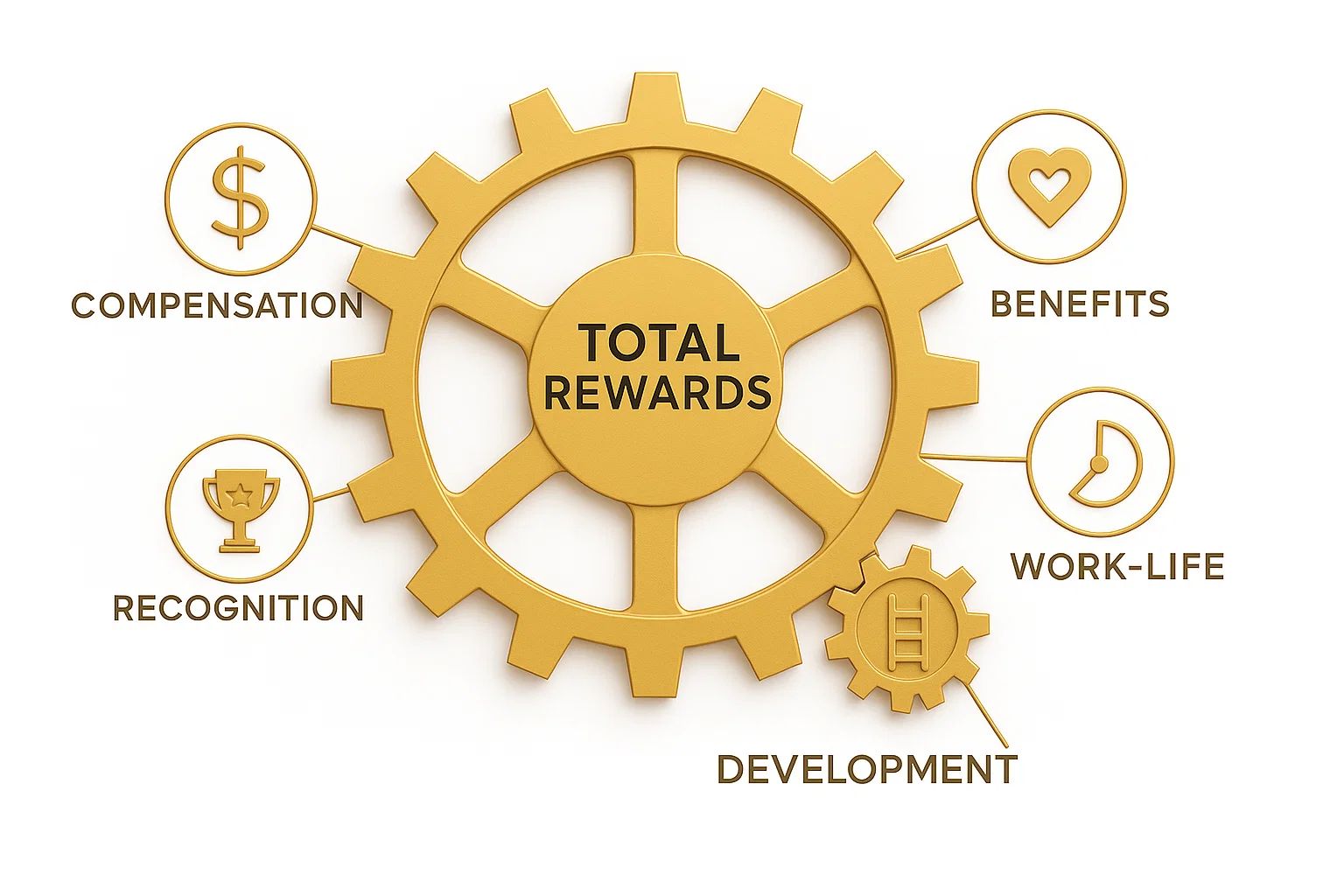
Key Components:
- Compensation: Base pay, bonuses, incentives, equity.
- Benefits: Health, retirement, and PTO (which can include tenure elements).
- Work-Life Balance: Flexibility, remote work, wellness.
- Performance & Recognition: Appraisals, awards, acknowledgements (for performance and service).
- Development & Career Opportunities: Training, mentorship, advancement paths.
The Goal: Create a balanced portfolio of rewards addressing diverse needs, motivating both loyalty and performance, aligned with company values.
Context is King: Tailoring Your Reward Strategy
The "perfect" balance isn't universal; it depends heavily on context:
Industry: Fast-paced tech vs. stable manufacturing have different priorities.
Company Size/Stage: Startups (equity focus) vs. large corporations (stability focus).
Strategic Goals: Innovation vs. consolidation vs. efficiency.
Organisational Culture: Values individual stars vs. teamwork.
Example: A startup might heavily rely on equity to reward talent, while an established firm might offer better long-term benefits, rewarding loyalty.
Understanding your unique situation is crucial for designing an effective strategy.
Making it Work: Implementation Essentials
Successful implementation requires careful attention to:
Fairness & Transparency: Reward criteria must be clear, consistently applied, and perceived as equitable.
Clear Communication: Regularly explain the reward philosophy, criteria, and components.
Alignment with Values & Goals: Ensure rewards reinforce desired behaviors and company objectives.
Regular Feedback & Adjustment: Treat the system as dynamic. Solicit employee feedback and adapt based on needs and effectiveness.
Conclusion: The Strategic Art of Rewarding Both
The Challenge: Rewarding employees is strategic, balancing valuable loyalty and high-impact talent. Over-focusing on either has risks.
The Solution: A balanced, context-aware "Total Rewards" strategy is most effective, considering the full spectrum of compensation, benefits, recognition, development, and work-life integration.
The Key: Success lies in fairness, transparency, clear communication, alignment with goals, and a willingness to listen and adapt.
The Outcome: A well-balanced reward system shapes culture, drives engagement, boosts retention, and fuels sustainable business growth.
Related Posts
Level-Up: Building an Innovation-Obsessed Company
Innovation isn't just luck; it's a systematic discipline built into a company's DNA, starting with people. Building an innovation engine for sustained growth.
Read more →Designing Effective Modern Marketing Organizational Structures
Explore modern marketing org structures, key roles, challenges, AI's impact, and a framework for strategic design.
Read more →