

Decoding Destiny: Life Lessons from The Alchemist
Paulo Coelho's 'The Alchemist' offers practical lessons on purpose, fear, perseverance, and living in the moment.
Introduction: Finding Gold in Unexpected Pages
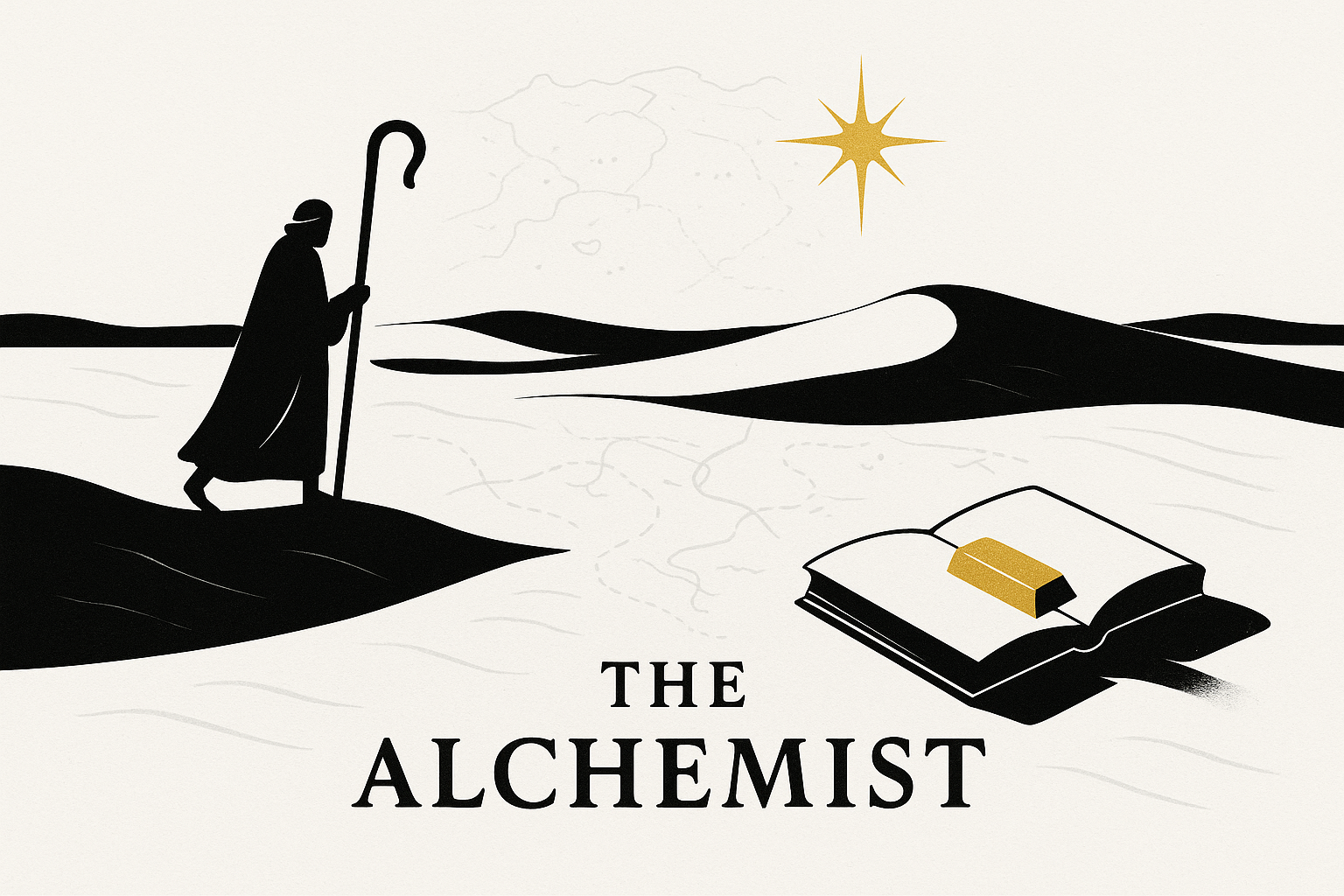
A book that genuinely stuck with me and left a lasting impression: Paulo Coelho's The Alchemist.
It's not dense or intimidating; it's a quick read. The basic gist? It follows a shepherd boy who goes on a quest for... well, his 'Treasure.' This quest takes him across oceans, through vast deserts, and leads to a whole lot more than just buried gold – it's packed with life lessons.
Now, I'm not gonna lie, I'm not big on flowery prose or abstract concepts for the sake of it. But this book? It hit me at the right time, and its core ideas are surprisingly practical, even for us non-philosophical kind. It's the kind of story that, despite its mystical elements, delivers grounded truths.
The Alchemist's Core Ideas: Plainspoken Takeaways
Instead of just listing a bunch of quotes, I wanted to organise the key ideas from 'The Alchemist' into some actionable, plainspoken takeaways. Think of this as the "Cliff Notes" version, focusing on the stuff you can use.
Here are some of the core lessons that resonated with me:
1. On Purpose and Destiny:
The book's core idea here is: "To realise one's destiny is a person's only obligation…"
Plainspoken Translation: You've got a primary goal, a personal path in this life. Your job? Could you figure out what that is and make it happen? Simple as that, right? (Okay, maybe not simple, but clear).
2. On Not Missing Out:
There's a line that goes: "When each day is the same as the next, it's because people fail to recognise the good things that happen in their lives every day that the sun rises…"
Plainspoken Translation: Pay attention. Seriously. Look around and notice the small wins, the good stuff, the little moments of beauty or connection that happen every single day. Don't just sleepwalk through life waiting for something big.
3. On Understanding:
Coelho writes: "If I can learn to understand the language of silence, I can learn to understand the world…".
Plainspoken Translation: Listening isn't just about hearing words. It's about really listening, even to what's not said, to the quiet cues, the subtle signals. That kind of deep understanding? That's a superpower in navigating the world and people.
4. On Dreams and Ambition:
This book is big on dreams: "Never stop dreaming" and "When you want something, all the universe conspires to help you achieve it…".
Plainspoken Translation: Keep dreaming big. Don't let go of those ambitions. And here's the practical bit: put in the work towards that dream. You might be surprised at the opportunities and help that show up when you're actively moving towards your goal. (Yeah, the 'universe conspiring' is a bit philosophical, but the effort part is key.)
5. On Individuality:
A simple truth: "Everyone has their way of learning things. His way isn't the same as mine, nor mine as his."
Plainspoken Translation: We all learn and grow differently. Our paths aren't identical. So, don't compare your journey or judge someone else's process. You can focus on your way.
6. On Facing Challenges:
There's a moment of stark acceptance: "If I have to fight and die in the end, then it will be just as good a day to die as any other!"
Plainspoken Translation: If you've got a difficult situation or a challenge you have to face, face it head-on. There's no point in delaying the inevitable or dreading it endlessly. Can you handle it when it arrives?
7. On Living in the Moment:
This is a big one for me: "I don't live in either my past or my future. I'm interested only in the present. If you can concentrate always on the present, you'll be a happy man. You'll see there is life in the desert, that there are stars in the heavens, life will be a party for you, a grand festival, because life is the moment we are living right now…".
Plainspoken Translation: Stop dwelling on what's already done or stressing about what might happen. The only thing you have right now is this. I'd like you to focus on the present moment. That's where life happens, where you can find joy and opportunity, even in unexpected places (like a desert!).
8. On the Journey's Difficulty:
A realistic note: "The closer he got to the realisation of his dreams, the more difficult things became."
Plainspoken Translation: Chasing big goals is hard work. Period. Expect setbacks, expect things to get tougher as you get closer. That's not a sign you're on the wrong path; it's a regular part of the process.
9. On Fate and Free Will (A Bit of Philosophy):
This gets a little more into the philosophical weeds: "God already wrote the future, and what he had written was always for the good of man," combined with "To die tomorrow was no worse than dying on any other day. Every day was there to be lived or to mark one's departure from this world."
Plainspoken Translation: This suggests a plan or destiny ('God wrote the future'), but it's balanced by the idea that each day is important and meant to be lived fully. It's not just about a predetermined end, but about making the most of the journey, one day at a time. It's a balance between accepting what is and actively living.
10. On Learning by Doing
An efficient lesson: "There is only one way to learn, it's through action."
Plainspoken Translation: Stop overthinking, stop planning endlessly, stop waiting for the perfect moment. Could you just do it? You will learn infinitely more from trying, from making mistakes, from taking action than you ever will from just planning forever.
11. On Fear and Suffering
The book has a robust dialogue here: "My heart is afraid that it will have to suffer" ... to which the reply is "Tell your heart that the fear of suffering is worse than the suffering itself, and that no heart has ever suffered when it goes in search of its dreams, because every second of the search is a second's encounter with God and with eternity".
Plainspoken Translation: This is huge. The fear of pain or failure is almost always worse than the actual suffering itself. Don't let that fear paralyse you and stop you from going after what you truly want. The act of pursuing your dream is valuable in itself, regardless of the outcome.
12. On Perseverance:
The book offers several reminders to keep going: one dies of thirst just when the palm trees have appeared on the horizon. Every search begins with beginner's luck… and every search ends with the victor being severely tested. The darkest hour of the night comes just before dawn.
Plainspoken Translation: Keep going, especially when things are at their worst. Don't give up right before the breakthrough. Success often comes right after the hardest part. Expect challenges after initial easy wins, and remember that the toughest moments usually precede success.
13. On Personal Legend vs. Ordinary Life:
A final thought-provoking point: Then you'll die while trying to realise your legend. That's a lot better than dying like millions of other people, who never knew what their legends were.
Plainspoken Translation: It's better, more fulfilling, and more meaningful to try and pursue something you deeply care about, even if you don't fully succeed, than to live a life where you never even figure out what that 'something' is or try to chase it.
Why These Lessons Matter Today (Interactive Reflection)
So, why spend time thinking about a book with talking deserts and alchemists? These lessons, while wrapped in a fable, are incredibly relevant to navigating our lives today. In a world that's constantly noisy and distracting, being reminded to pay attention to the present moment? That's powerful. When we're bombarded with images of effortless success, remember that the journey gets harder as we get closer to the goal. That's grounding. When the fear of failure stops us from starting, hearing that the fear is worse than the suffering? That's motivating.
These aren't complex academic theories; they're simple, fundamental truths about human experience and the pursuit of goals. They prompt you to reflect on your path, your fears, and how you're living each day. Do you ever find yourself stuck worrying about the past or future? Do you sometimes miss the small good things? Do you let the fear of trying stop you? I know I do sometimes.
Conclusion: The Alchemist's Enduring Footprint
Look, I'm not saying this book is the single answer to everything, or that reading it will magically solve all your problems. However, it's a solid, humble reminder of some fundamental yet profound truths about life, setting goals, and how we choose to approach our journey.
And honestly? That kind of reminder, delivered in a simple and engaging story, is quite helpful. It leaves a footprint.
Related Posts
Intern Movie - A Lesson for Founders
'The Intern' offers surprising and valuable lessons for anyone building a company, including the importance of experience, mentorship, and human connection.
Read more →Glen from Blacklist Taught Me: The Power of Being Unafraid
Unexpected wisdom I found in Glen Carter, Red Reddington's quirky associate from 'The Blacklist', his striking lack of fear.
Read more →